VERDE³
Design proposal for an age-friendly sensory garden in the Ponte San Giovanni district of Perugia
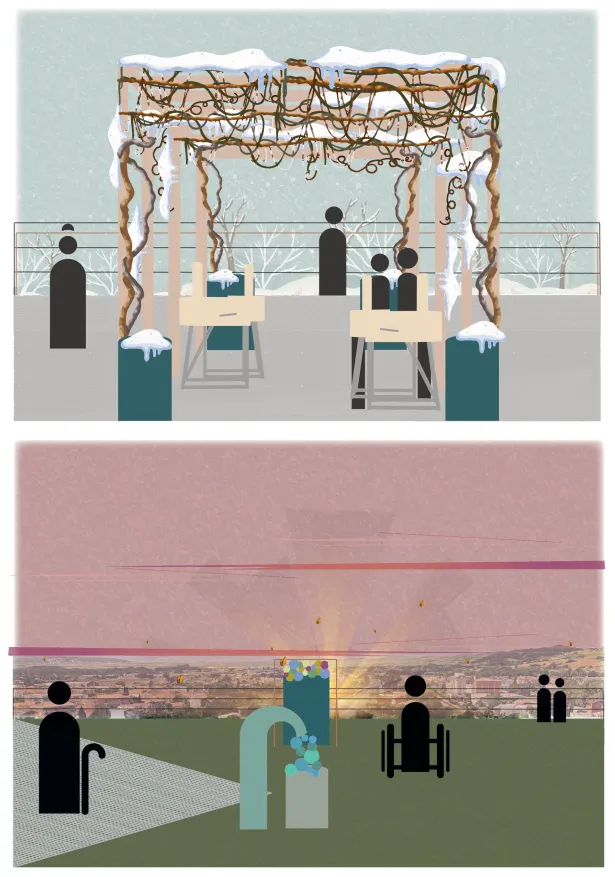
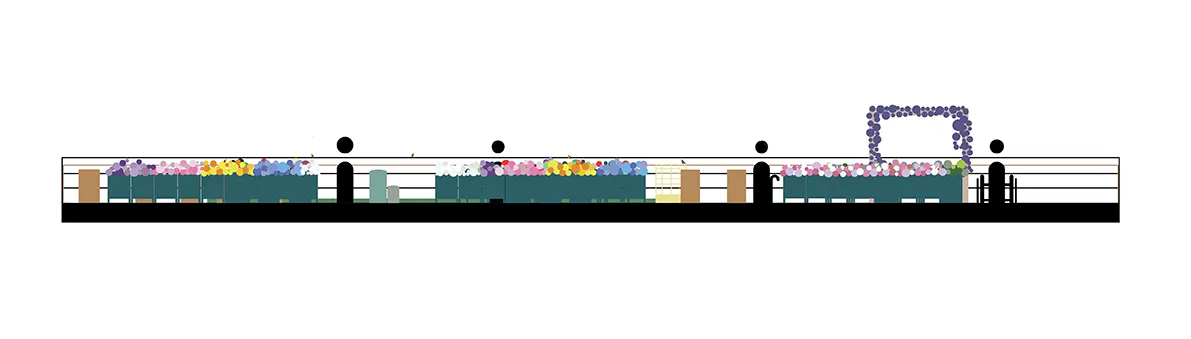
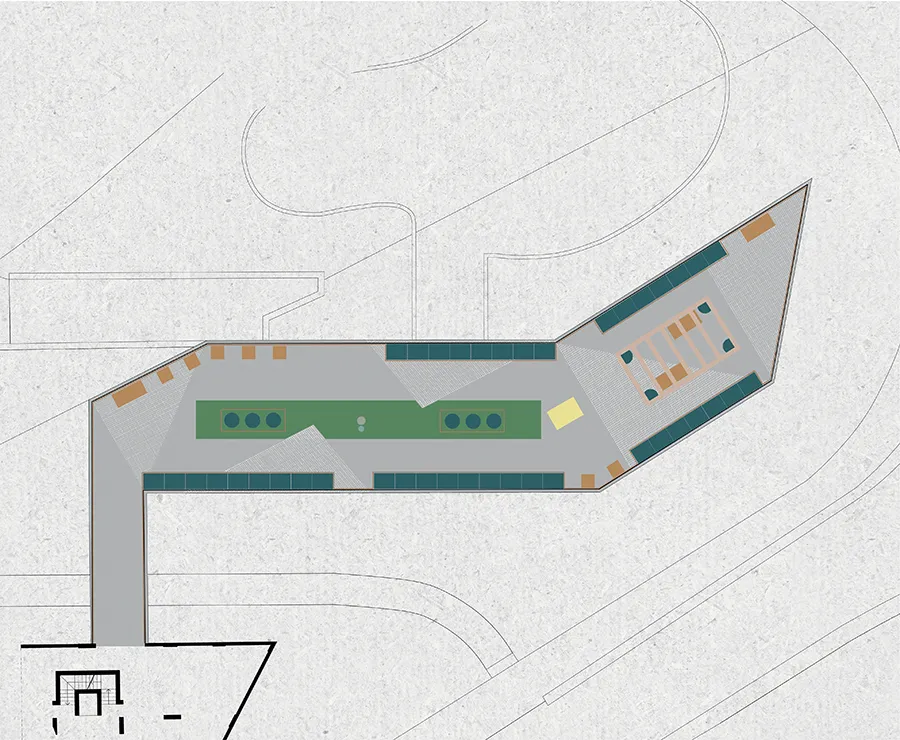
The project proposes the creation of an age-friendly sensory garden on the roof of one of the buildings in the former Palazzetti area of Ponte San Giovanni (Perugia), home to a kindergarten. The intervention aims to create an accessible, healthy, and sustainable place that fosters interaction between generations. The space is organized into open and closed areas, both collective and private, without architectural barriers and with plant containers at the right height to facilitate accessibility even for people with reduced mobility. The elements of the garden are designed to stimulate the five senses through targeted choices of vegetation, materials, and furnishings. The plant containers – made from reused industrial metal drums – host species selected for their visual, olfactory, tactile, and gustatory impact: colorful blooms, aromatic plants, foliage with different textures, and edible plants. Hearing is stimulated by a sound fountain composed of a steel tube and a reused drum, while an open aviary integrated into the structure, built with recycled materials, houses small birds.
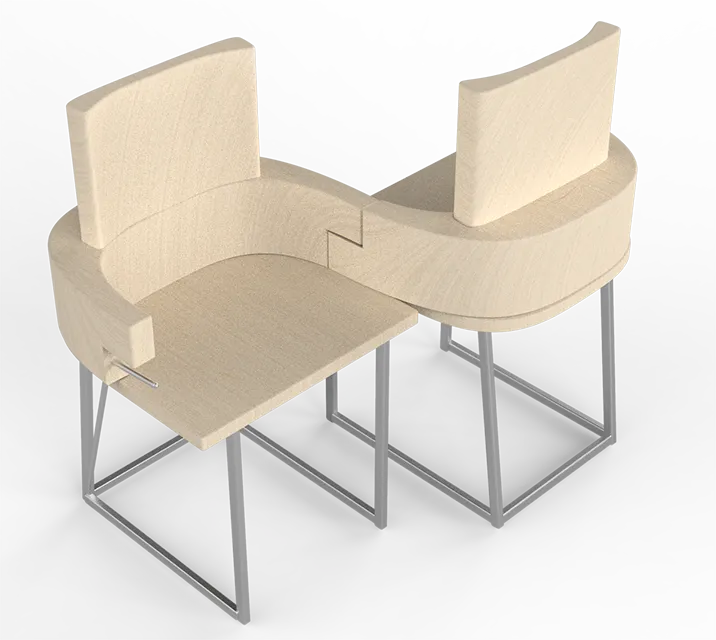
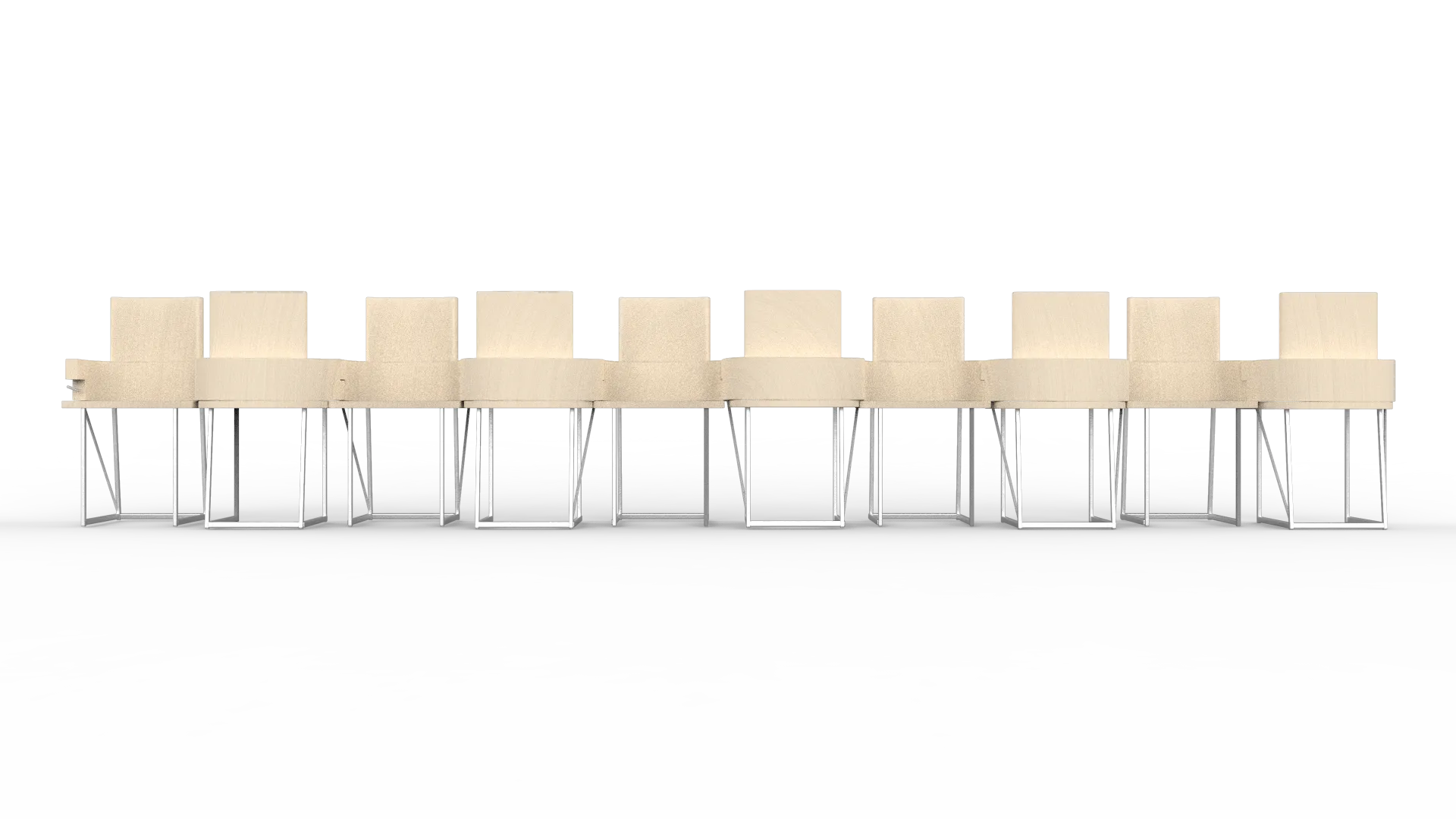
From a construction point of view, the garden uses recycled materials to reduce costs and maximize sustainability. The flooring is made of recycled EPDM anti-trauma rubber from tires and steel metal grids from construction sites. Seats, handrails, parapets, and pergolas are derived from industrial wooden packaging and reinforcement bars, making the project consistent with the principles of reuse and circular economy. Shaded areas are guaranteed by pergolas made from wooden cages, enriched with climbing vines. The modular seats, inspired by nineteenth-century tête-à-tête armchairs, are designed to offer comfort, sociality, and flexibility. Made of recycled wood and metal, they are assembleable and modular thanks to a male-female interlocking system, which allows them to be combined at will. Some armrests also serve as supports for standing up, increasing user autonomy. The project combines inclusive design and environmental sustainability, generating a multisensory experience in a place designed for physical, mental, and relational well-being.